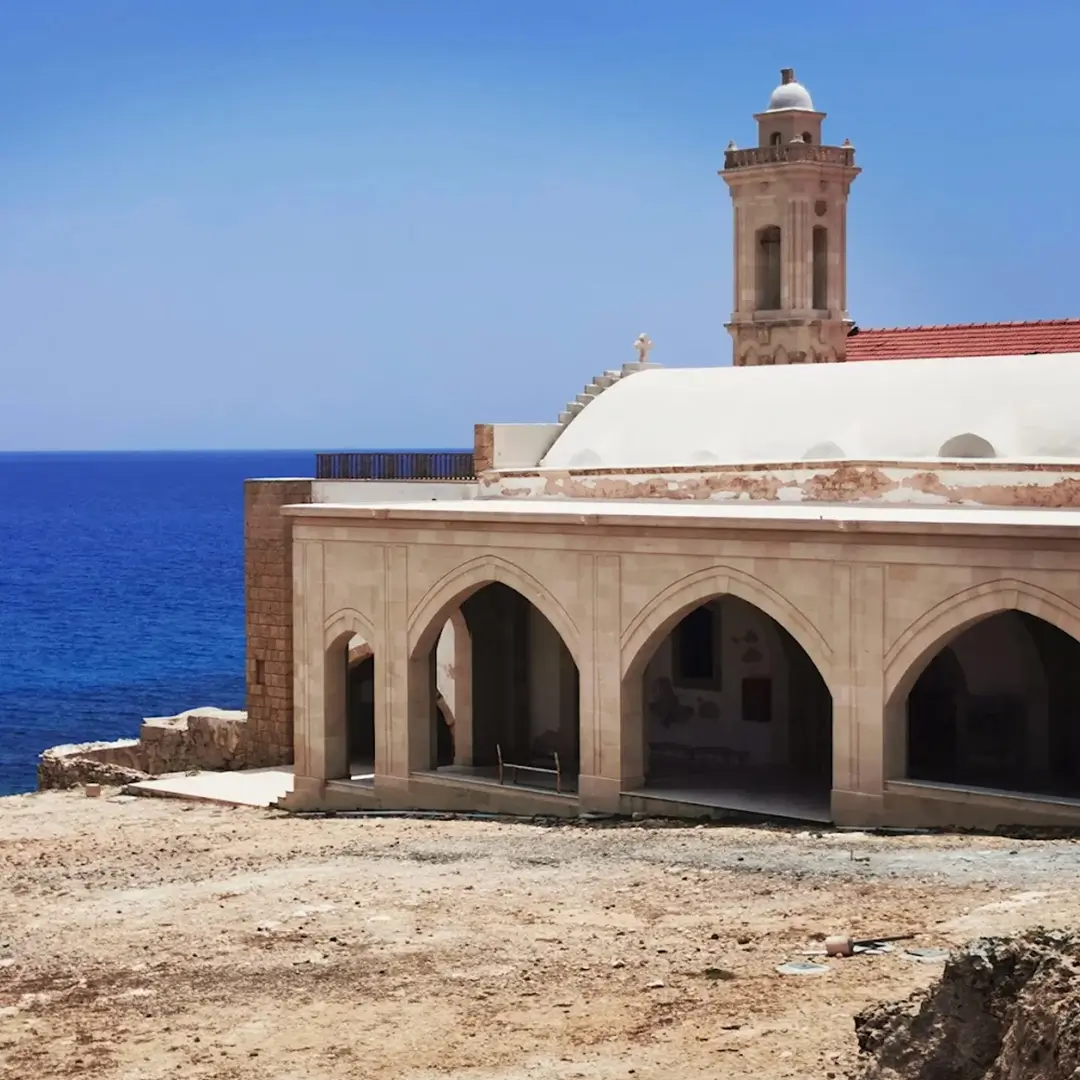
Holy Church
The main place where pilgrims have worshiped for centuries
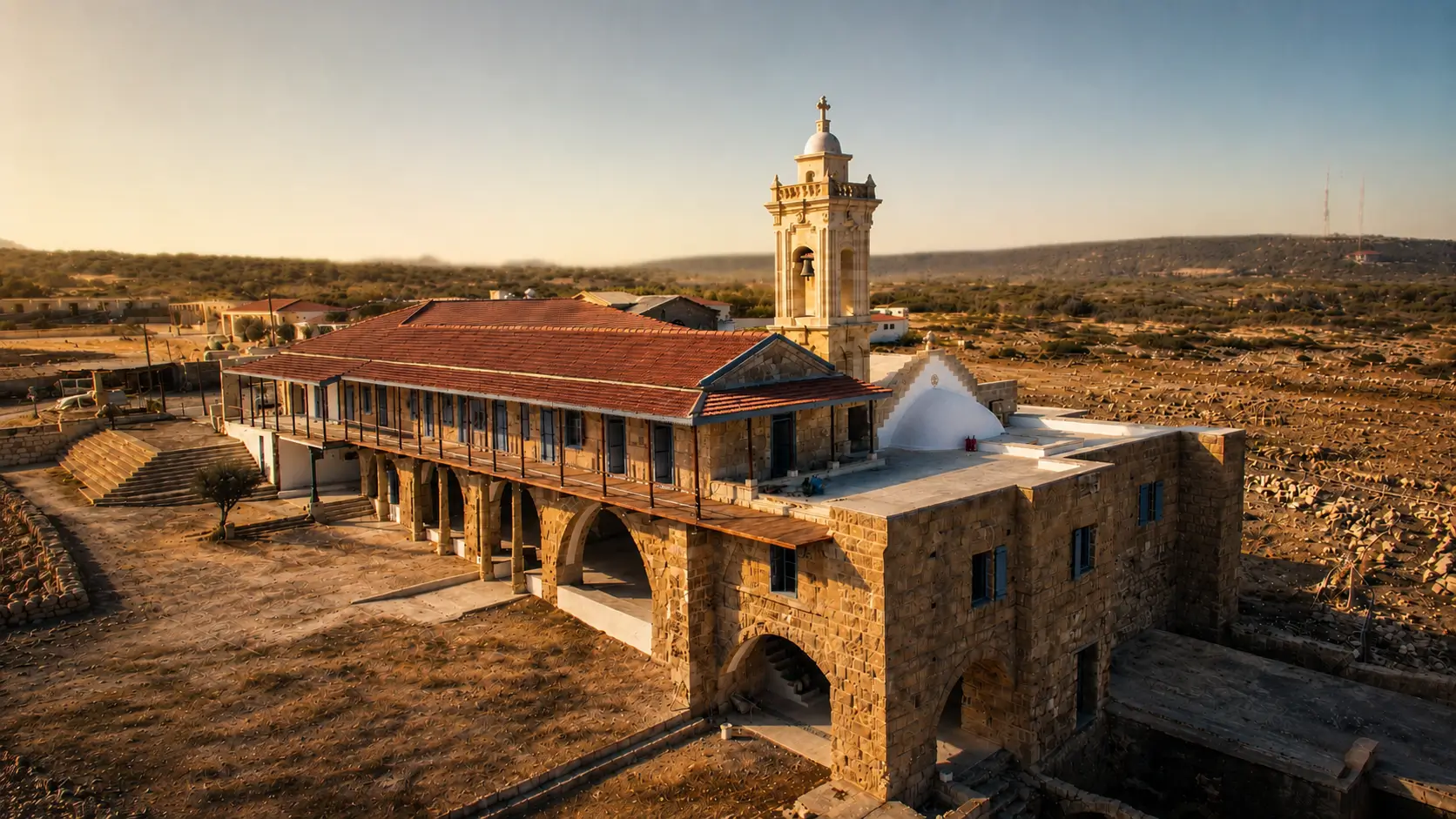
Discover the sacred architectural heritage of the Eastern Mediterranean closely.
Apostolos Andreas Monastery is a large building complex located at the easternmost end of the Karpaz peninsula and considered one of the well-preserved religious architectural examples of the Eastern Mediterranean. Complex; It consists of churches, courtyards, prayer areas and accommodation structures.
The holy church, one of the most striking parts of the monastery, is the main place used for worship and pilgrimage for centuries.
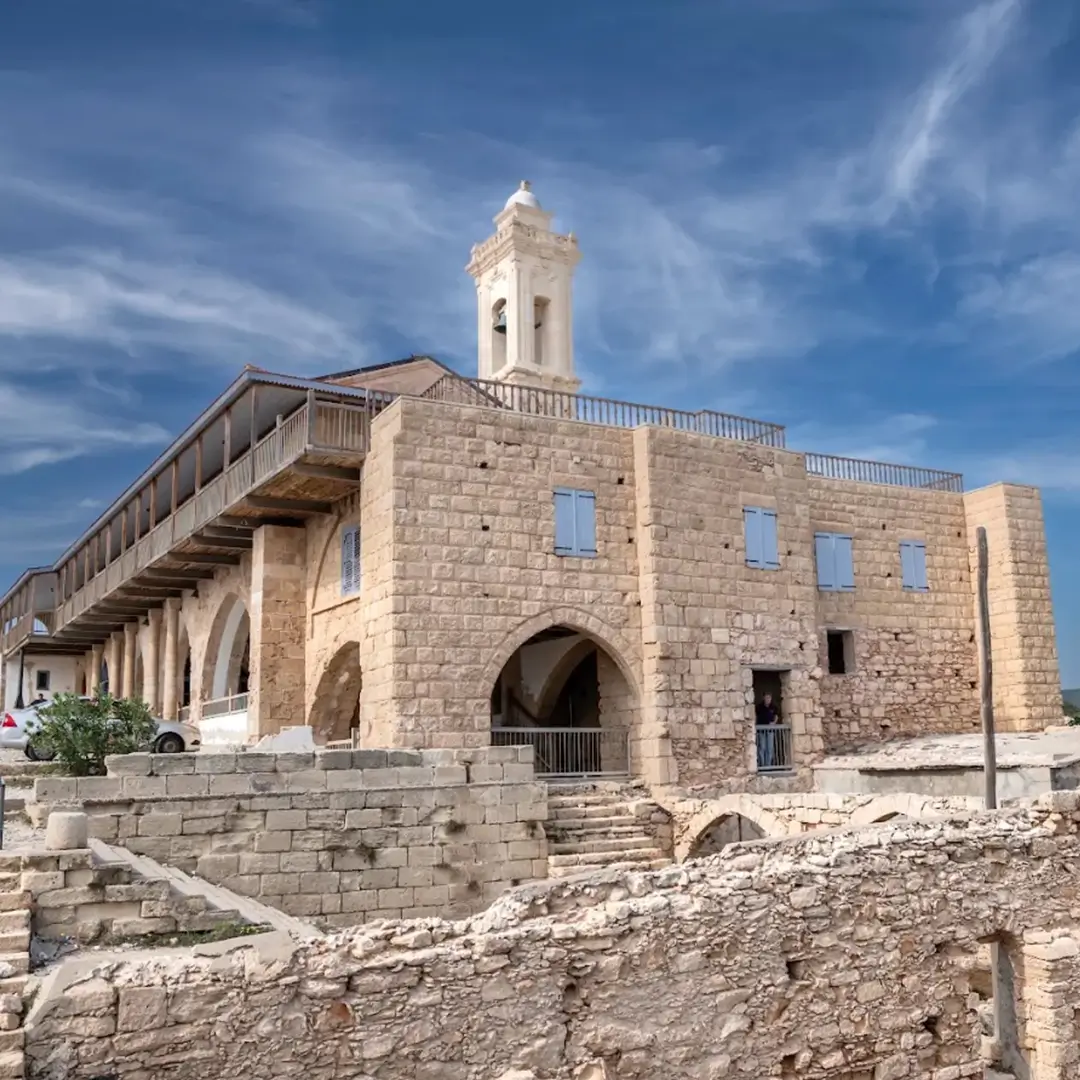
The iconic courtyard of the monastery is the central area where monks and pilgrims carry out their daily activities.
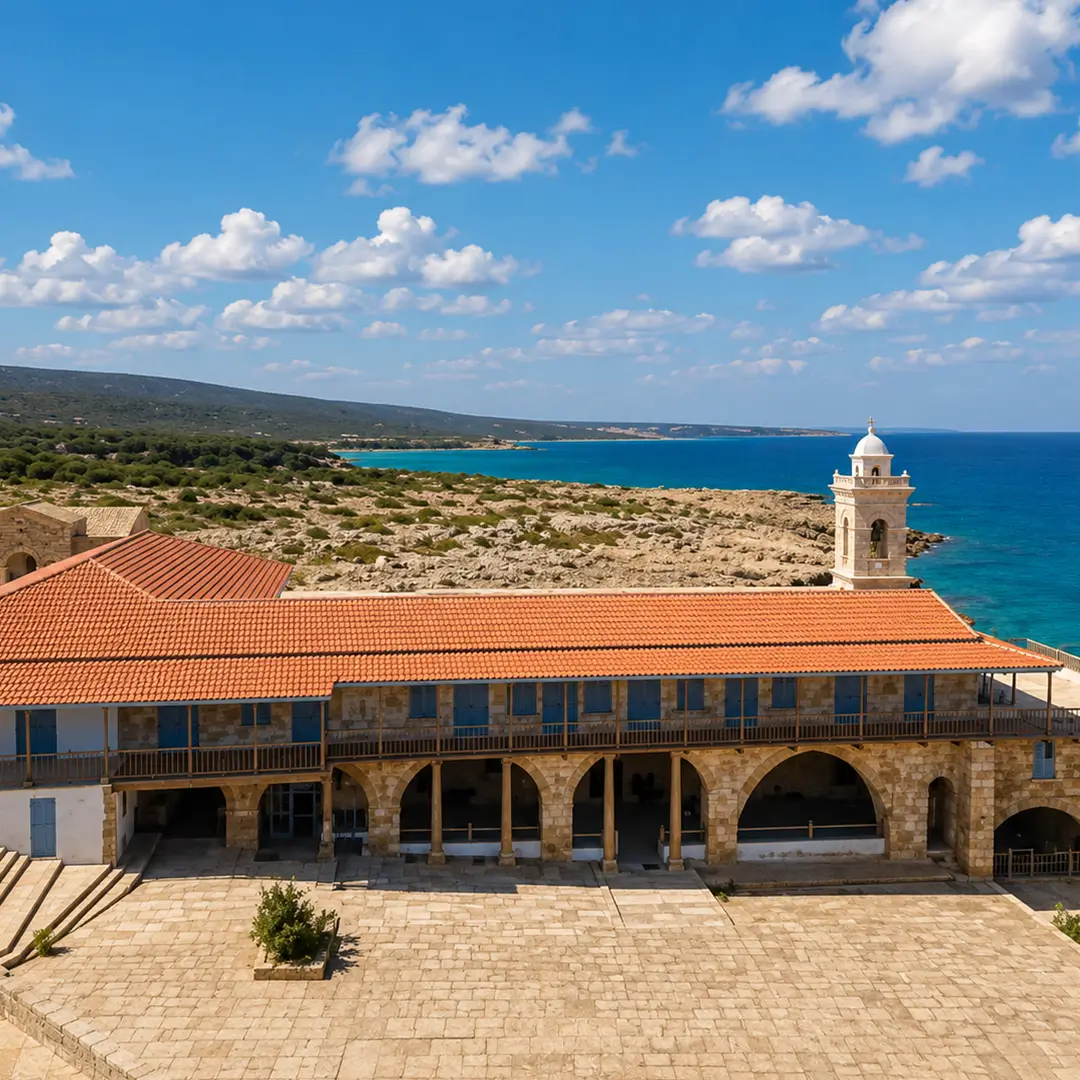
The accommodation buildings in the monastery complex provided shelter for pilgrims coming from distant places. Stone walls, arched passages and simple rooms are characteristic elements of monastery architecture.
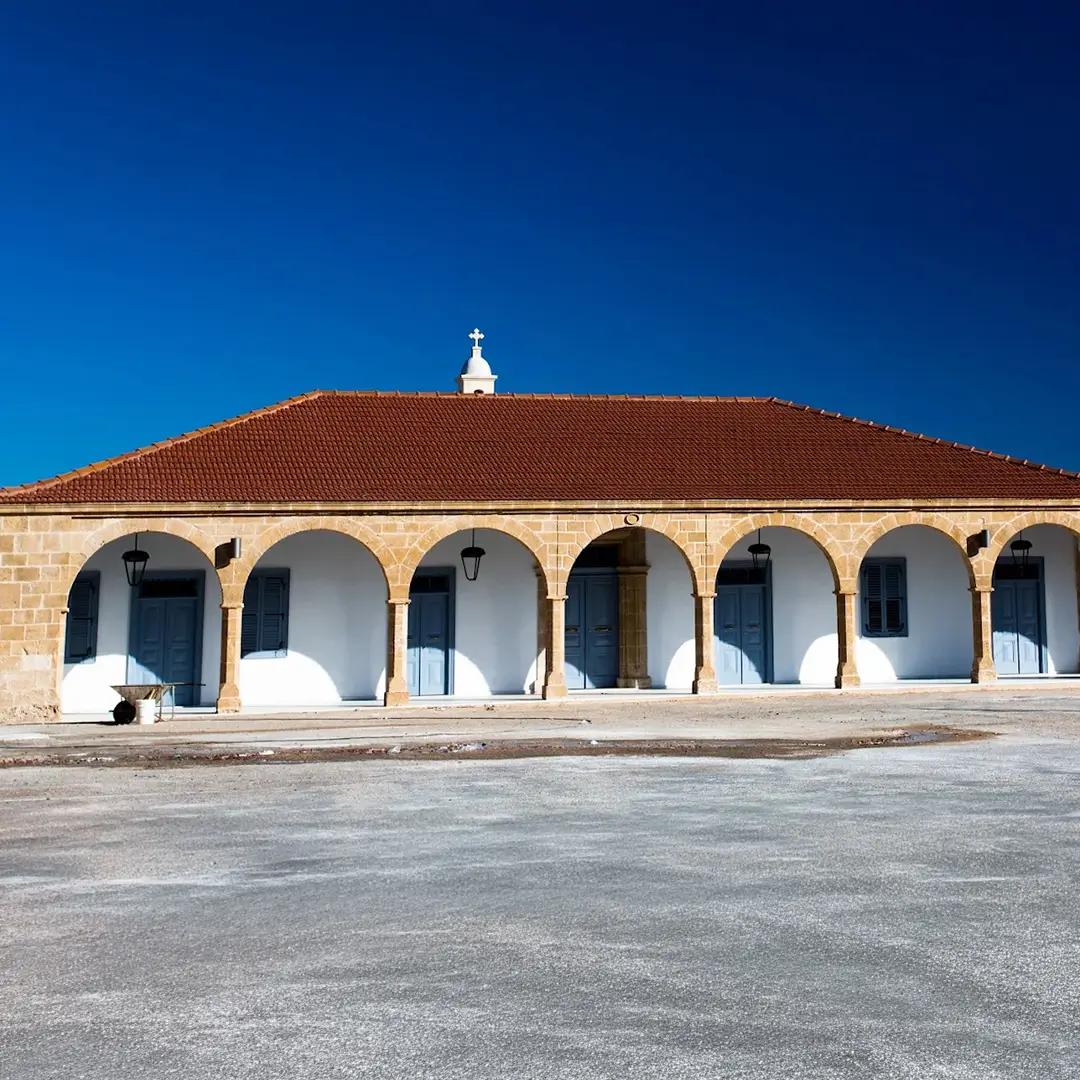
The monastery is located right on the seashore at the easternmost end of the Karpaz peninsula. High walls, observation openings and sea-facing terraces reflect the religious and defensive elements of the building.