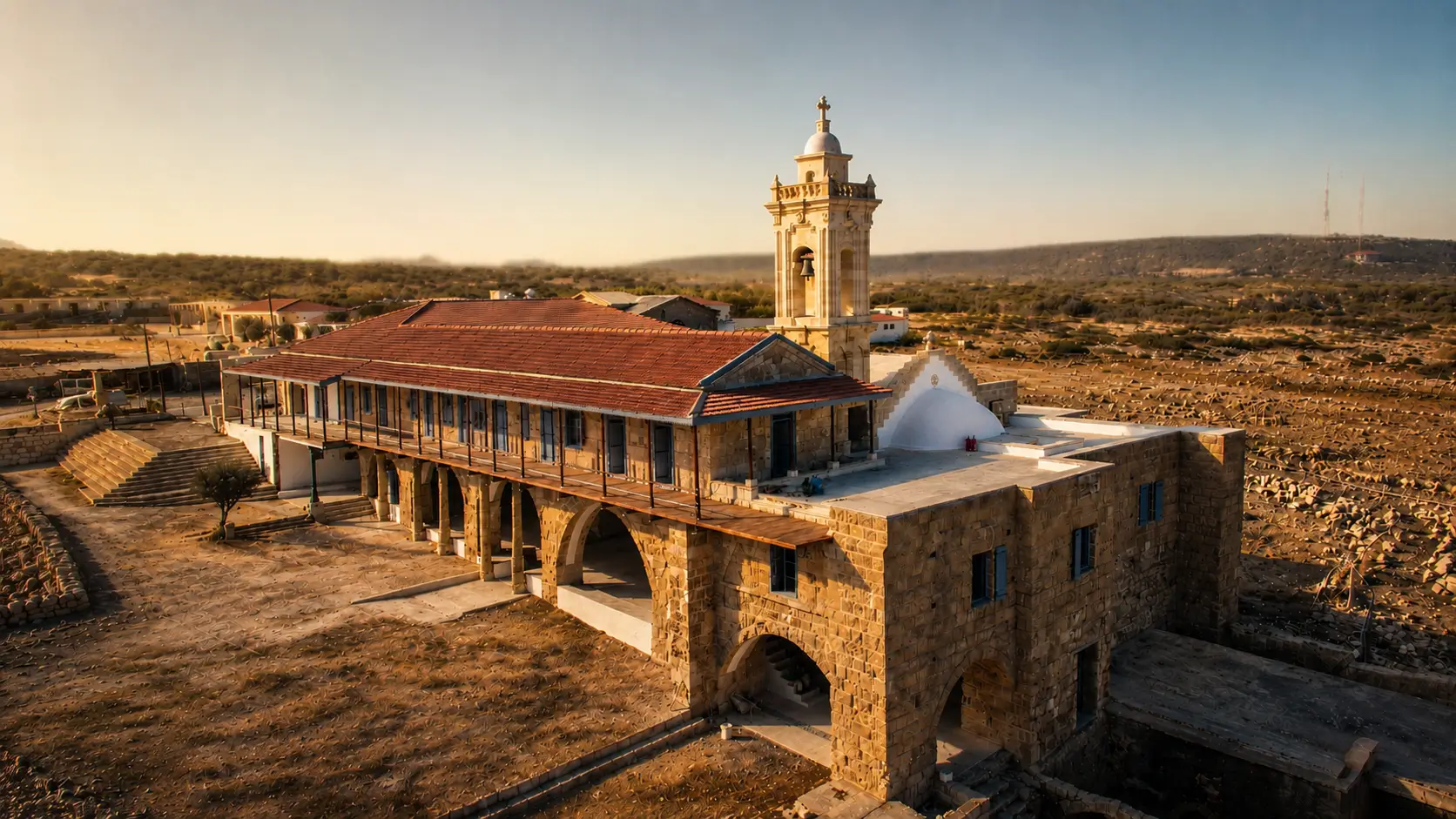
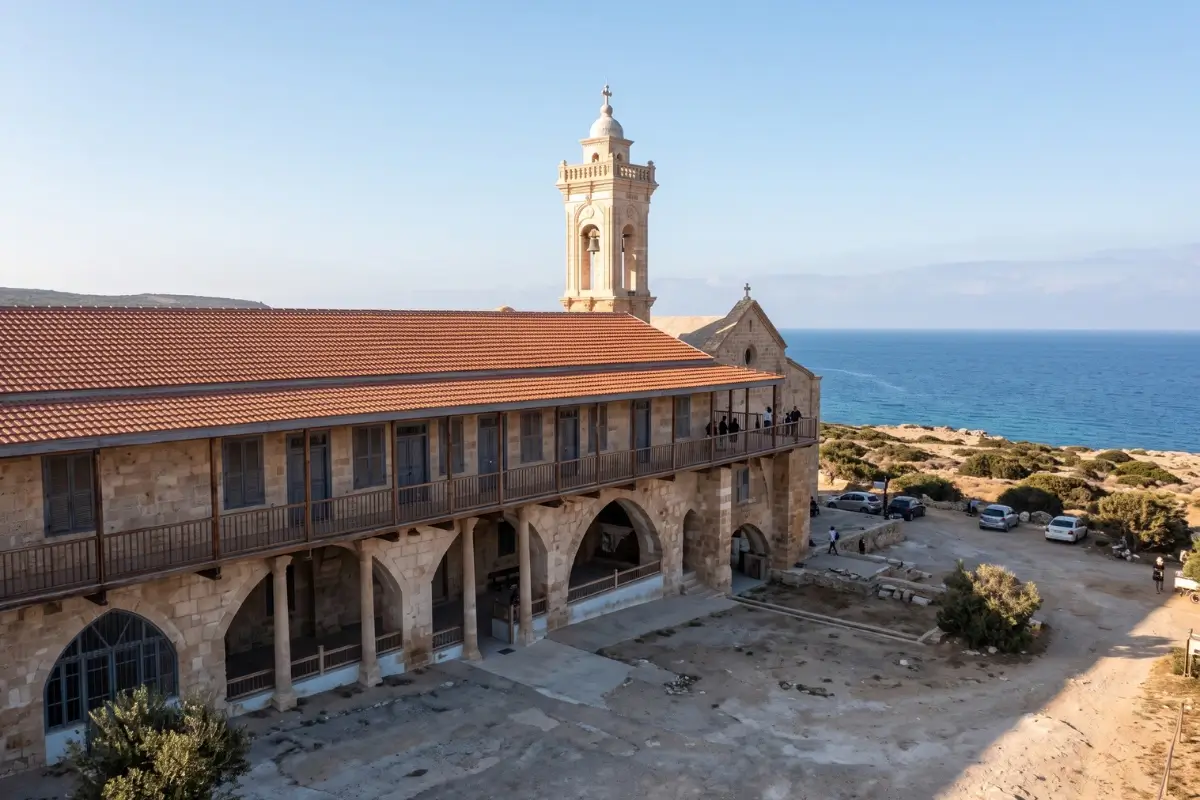
The Apostolos Andreas Monastery restoration is being carried out as a two-stage major project; The first phase was completed in 2016, and the second phase is in its final stage to be completed in September 2026. The restoration is managed by UNDP with the joint financing of the Church of Cyprus and EVKAF, and is considered a symbol of peace as the first cultural heritage project funded jointly by the two communities on the island.
Stages of Restoration
Phase A (2014–2016)
- Start: Started in September 2014.
- Scope: Structural and architectural restoration of the main church and adjacent buildings.
- Studies:
- Renewal of electrical and mechanical systems.
- Women's gallery (gynaikonitis) has been expanded.
- Altar, ambone and iconostasis were restored.
- 58 icons have been renewed.
- A new portico was added to the back of the church.
- Completion: Opened on St. Andrew's Day, November 30, 2016.
Click for Detailed Information
Phase B (2016–2026)
- Scope:
- Restoration of the medieval church and its surroundings.
- Sacred fountain area and access roads.
- North wing designed by Theodoros Fotiadis in 1919.
- Re-functioning of the octagonal water tank dated 1898.
- Status: In the final stage as of August 2026; It is expected to be completed in September 2026.
Cultural and Political Importance
- First Joint Project: The first cultural heritage project jointly funded by the Church of Cyprus and EVKAF.
- Symbol of Peace: The restoration, carried out with the cooperation of the two communities, is a concrete sign of peace despite the political stalemate in Cyprus.
- UNDP Contribution: The project stands out as one of UNDP's "confidence building" initiatives.
Visitor Perspective
- Active Pilgrimage Site: It is not a museum; There is no entrance fee, it can actually be visited during daylight hours.
- Rules: Silence, respectful dress and the tradition of drinking water from the sacred fountain.
- Restoration Effect: Some sections may still be closed; The scaffoldings seen are signs of maintenance work.
Click for Detailed Information
Highlights
- First phase: Completed in 2016, church and icons were restored.
- Second phase: Ends in September 2026; The fountain, medieval church and water tank are being renewed.
- Symbol: The strongest example of the efforts of the two communities in Cyprus to protect the common cultural heritage.
Sections to be opened after the restoration of the Apostolos Andreas Monastery
When the second phase of the restoration (2016–2026) is completed, the following new areas will be opened to visitors:
- Medieval Church: The historical section around the main building will be reopened to visitors after structural strengthening and architectural renovation.
- Sacred Fountain Area: The fountain and its surroundings, which are considered the miraculous water source of St. Andrew, will be restored and made available to pilgrims.
- 1919 North Wing: Designed by Theodoros Fotiadis and closed for a long time, this section will be re-functioned and opened to visitors.
- 1898 Octagonal Water Tank: The historical water tank will be restored and made visible as a cultural heritage item.
Contribution to Visitors
- Wider access: Visitors will be able to see all historical layers of the monastery, as previously closed sections will be opened.
- Cultural experience: The water tank and fountain area will strengthen the pilgrimage tradition.
- Architectural diversity: Seeing the medieval structure and the 19th century annexes together will reveal the historical evolution of the monastery more clearly.